How much does video production cost?
What does video cost?
More and more, companies, non-profits, and schools are turning to video to add flare to their website, advertise, or concisely state their message. Video works in ways pictures and text cannot to draw in new clients, donors, or students and is easily viewable and shared from desktops to laptops and mobile devices. The question then becomes how much will video cost your business? The beauty of video is that every project is unique and likewise every budget varies. Therefore, the cost of your video is derived through carefully measuring the volume of pre production, production, and post production needed to create your vision.
Pre Production
Pre Production entails all the preparation leading up to the shooting and editing of your video and is the most important step in video production. It’s at this stage that we ask you to tell us what you want to say in your video. A producer can then take your message and help you find the best possible way to show it through video and even prepare a script to help illustrate the structure and look of the final product.
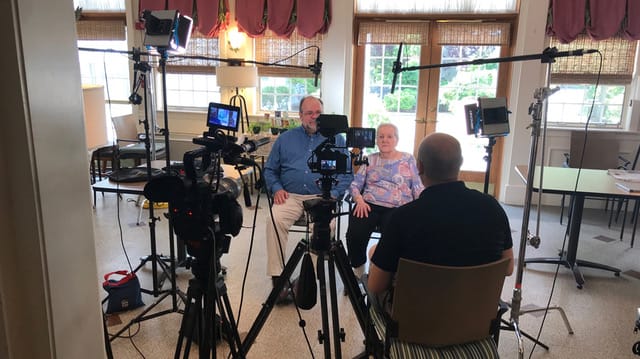
In the pre production stage, costs are derived from how much preparation is required before the shoot day. Most corporate projects consist of interviews, B roll, and voice over narration and can easily be handled by a producer, cinematographer, and a lighting specialist. Additional crew might be necessary on complex television, music video, or product videos with complex lighting setups or scheduling. If your project requires actors or unique locations, there might be a cost for finding the talent and locations. Using several locations often forces your project to span multiple shooting days. The producer will work with you to schedule your shoot days, determine the size of the crew, and focus your message so that the end result is effective and high quality without breaking the bank.
Production
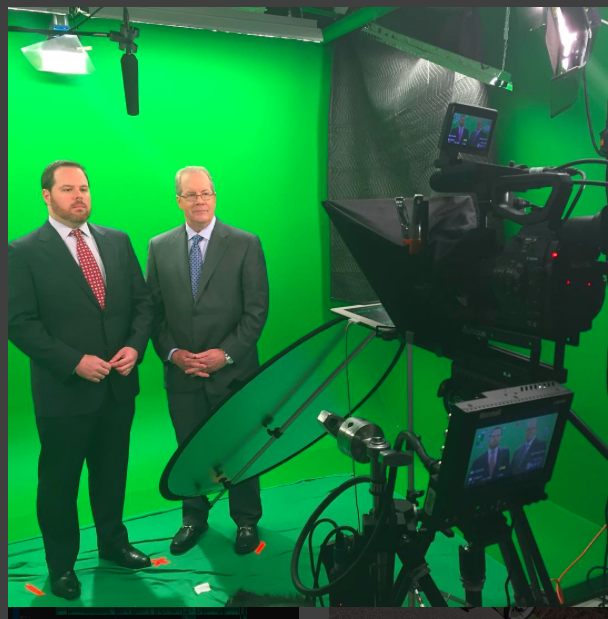
Production is the process of shooting your video. When the crew arrives on set, there are 3 steps: Lighting, rehearsal, and shooting. Lighting is very important to the professional look of your video and can range from very simple interview setups to complex scenes. The producer will build the appropriate amount of lighting time into your schedule. Rehearsal time is only necessary for scripted commercials, music videos, or scenes and not only involves practicing the delivery of lines, but also the placement and movement of the actors or performers within the scene. After the location is lit and the actors rehearsed, the cameras can roll. Productions costs are based on the amount of lighting, props, and camera equipment needed to complete your project. Most corporate videos require simple lighting, no props, and one or two cameras, but more complex projects such as short films, skits, and music videos likely need additional equipment to maintain a professional quality. Yet again, the producer will work closely with your company to suggest the proper amount of equipment and time to shoot your video.
Post Production
After the video is filmed, the editing, or Post Production process begins. This is where the footage is trimmed, color corrected, polished with graphics, voice over, and music and delivered to you in the format of your choice. The producer and the editor of your project will discuss the editing style and structure of your video in the Pre Production stage so that the video is shot with the end result in mind. When interviews and testimonials are part of your video, the footage will have to be transcribed and sent to the producer. The producer will then adjust the script written in Pre Production to include the transcribed interviews and send it to you for your approval. After, the editor will use the new script to edit the footage. During the editing process, the status and versions of your video will be sent to you for your review and input or you can sit with the editor and see the footage for yourself. The cost of Post Production is based on how many days it will take to finish your video. The addition of professional voice over narration, intensive graphics, and mass reproduction of DVD or Blu-ray disks also affect the cost of your video. The total cost of Post Production is determined in the Pre Production process by the producer.
Building the Budget
When the producer builds the customized budget for your video, all elements from Pre Production, Production, and Post Production will be considered and listed line by line for your review. With a budget presented in such a detailed form, it’s easy to add and subtract line items before agreeing on a final cost that your company is comfortable with. Our goal is value: To provide the highest level of quality, professional video at the best possible cost and we will work with you to provide a product that you will be proud of.
If you’re interested in learning more about how we can help your company through video production, give us a call at 781-229-5900.
Video Production for Mobile Devices
Much like Internet video, the viewership of video on mobile devices has skyrocketed in recent times. Naturally, younger people make up the majority of that viewership. According to Nielsen, from Q3 of last year, “The majority of 25-34 and 18-24 year olds now own smartphones (64% and 53% respectively),” and that has undoubtedly increased through the end of 2011 and up until now in the spring of 2012. The same goes for the number of users who have viewed videos on mobile devices; five million feature phone viewers and 26 million smartphone viewers in Q3 of 2011. [1]
As of February 2012, almost half (49.7%) of U.S. mobile subscribers now own smartphones. According to Nielsen, this marks an increase of 38 percent over last year.[2] This is great news for those producing video for mobile viewing, as it is much easier and more common to watch videos via a smartphone compared to with a regular feature phone. Compounding that, “Display ads (video or banner) on mobile devices such as tablets and smartphones are trusted by one-third of global respondents, which is slightly higher than the reported consumer trust level of text ads on mobile phones (29%). While the reported consumer trust level in mobile phone advertising is still low, it increased 61 percent since 2007 and 21 percent since 2009.”[3]
So, basically, not only is the number of people viewing video content on mobile devices increasing rapidly, but they also trust that content more now than ever before. Those numbers and trust levels are only going to continue to rise in the coming months and years. Clearly, it is in every company’s best interest to try to stay ahead of (or at least try to keep up) with the curve when it comes to the mobile consumer.
Also, check out this cool infographic by Nielsen about digital consumers:
http://blog.nielsen.com/nielsenwire/online_mobile/infographic-the-most-valuable-digital-consumers/
Click here if you’re interested in some more technical information about the future of video online and on mobile devices.
[1] http://blog.nielsen.com/nielsenwire/online_mobile/report-the-rise-of-smartphones-apps-and-the-mobile-web/
The Future of Internet and Mobile Video
Watching videos on the web, and especially on mobile devices, is a bit more complicated than it seems. This stems largely from Apple’s disdain for Adobe Flash, which is why Apple doesn’t allow the Flash runtime to be installed on iOS (the operating system for the iPhone, iPad, and iPod touch). According to Adobe, 75% of web video is viewed using the Flash Player, 70% of web games are made in Flash, and 85% of the most-visited web sites use Flash in some way.
The late Steve Jobs had some very strong feelings about Flash, and Apple’s relationship with it. There have been many arguments for both sides, whether it’s from web designers, app developers or just the everyday Internet consumer. One of Jobs’ gripes was that Flash videos drain a device’s battery life. For example, on an iPhone, videos decoded through hardware can play for up to 10 hours, while those decoded through software (Flash) would play for only 5 hours before the battery is drained. Another is that Flash is not very secure (according to Symantec).
The biggest problem for Flash when it comes to websites is that many Flash websites were not built with touch screens in mind, but rather for PCs using a mouse. For instance, many Flash-based websites have “rollovers” which allow additional options or sub-menus that appear when the cursor hovers over a particular area. This action just can’t be done with a touch screen unless the coding for the site is rewritten. However, many sites have created mobile versions of their pages that are completely touch-friendly, but there are still plenty of websites that have not, will not or cannot make a mobile version for a variety of reasons.
This issue does not necessarily pertain directly to video-watching on a mobile device, but if you have an Apple device and a website is either made with Flash or has a Flash video on it, you won’t be able to see it. The same goes for the plethora of Flash games on the Internet. But eventually, Flash support for mobile devices will go away completely. The new version of the HTML coding language, HTML5, is solving the operating system and browser compatibility issues with video. Instead of being owned by one sole proprietor like Flash (Adobe), HTML is controlled by a committee of three companies (Apple, Mozilla Foundation, and Opera Software), thus making it an “open standard.” This “openness” allows different companies and people to contribute to the improvement and advancement of the system. Both iOS and Android support HTML5.
This is a pretty tech-heavy topic, but Long Tail Video does a great job explaining HTML5 and its benefits for video playback compatibility. You can check out that information here: http://www.longtailvideo.com/html5/.
High-Definition vs. Standard-Definition Video
High-Definition vs. Standard-Definition Video, Aspect Ratio, and Frame Rate

Just about everyone knows that HD stands for “high-definition,” but why do all those numbers matter to you? Three words: quality, quality, and quality. A Full HD image is just so much clearer, and because of its large size, all the small details can be seen much easier and clearer. Also, when viewing HD video on a large TV or monitor, the video is usually shrunken to fit the screen, which means there is no loss of image quality. In contrast, an SD video would have to be stretched to fit a large screen, thus decreasing its viewing quality and making the image look pixelated, or unsmooth.
Two other things to consider are aspect ratios and frame rates. Aspect ratio refers to the shape of the image (the ratio of its horizontal length to its vertical height). The two common aspect ratios are 4:3 (4×3 or standard) and 16:9 (16×9 or wide-screen). The 4:3 ratio is definitely going by the wayside, as it is pretty rare for video to be shot in 4:3, in addition to TVs like your old square-ish tube TV being nearly extinct. The most practical reason for the 16:9 ratio is that is much closer to the shape of what we see with our eyes; the image is much wider than it is tall (78% wider, as opposed to just 33% with the 4:3 ratio). Click here to read more in-depth about aspect ratios and see some comparison images.
Frame rate in video refers to the number of frames shown per second (fps). As you probably know, video (based off the concept of film and film projection, of course) is made up of still images that are shown quickly enough to “trick” the brain into seeing continuous motion. We like to use the cinematic-looking 24fps, which is the typical frame rate for movies. If placed side-by-side, just about anyone would notice the difference between footage at 24fps (movies) and 30fps (typical television/video frame rate). The 30fps tends to have a more “realistic” feel, but the 24fps definitely has an artistic and engaging quality that is very hard to replicate or to fake by using effects.
The combination of using the highest quality and most aesthetically pleasing specifications will make all the difference in creating a professional, engaging and impactful video.
McElroy Films is Proud to Release 2012 Demo Reel
April 12, 2012 by admin
Filed under Blog, Featured Video
As we reflect on the last 12 months, 2011 brought many exciting changes to our Boston-based video production company. When McElroy Films outgrew it’s office, increased staff, won 3 more Davey Awards, and expanded services all within a calendar year, it’s safe to call 2011 a success, but that success is something we’ve come to expect in our office.
Yet again, we were awarded three more Davey Awards for non-profit videos produced for Fenway Health, the South Shore Habitat for Humanity, and the New England Pediatric Center. The latest awards came in addition to the Telly Award given in early 2011 for yet another Fenway Health video.
The winning ways extended into our wedding division as McElroy Weddings won the highly coveted Bride’s Choice Award from the Wedding Wire and the Best of 2012 from The Knot. Both awards are based solely on positive client reviews and are only awarded to the top 5% of the many hundreds of thousands of members on each website.
2011 saw dozens of exciting new videos produced for new and established clients.
Acclaimed singer, Brian Evans, originally of Haverhill, MA, enlisted us to promote his hit single At Fenway in a 30-second spot featuring Hall-of-Famer Jim Rice. The spot not only fueled the song’s induction into the Baseball Hall of Fame, but also aired during the Super Bowl in several regions across the United States.
We also produced a hip-hop music video for local artist, G-Star, which accrued hundreds of thousands of views on YouTube in mere weeks.
At about the same time, McElroy Films delved into the New Hampshire Republican primary, becoming former Speaker Newt Gingrich’s personal videographers at a time when the race was still hotly contested. Videographers Ben and Brittney found themselves traveling to every corner of the Granite State, following Newt as he campaigned from senior centers to college campuses. After the New Hampshire primary, McElroy Films produced web spots and commercials for the South Carolina primary.
New videos for non-profit Fenway Health were featured at two of the largest gala events for the LGBT community in the country in both 2011 and early 2012: The Men’s Event and the Women’s Diner Party. Another non-profit giant, the Crohn’s and Colitis Foundation of America (CCFA), had a video produced for their premiere fundraising event as well as videos detailing the CCFA’s major fundraising programs such as the Take Steps and Team Challenge campaigns. All the videos went a long way in detailing the missions of Fenway Health and the CCFA for potential donors.
The past year also included training videos for Triple-S and the Boston Fire Department as well as educational videos for Fenn School, Holy Name High School, and the Pakachoag Music School.
With all the success and a host of new projects on the horizon, McElroy Films seems ripe for even greater success in 2012 and beyond. We would like to thank our clients for trusting us with their video, web hosting, and distribution needs, as, without them, our success wouldn’t be possible.
Boston High Definition Videography
McElroy Films has been trusted by countless firms in Boston for providing professional high definition videography services. Companies ranging from non-profits to consulting firms. Get your project done right the first time with an award-winning staff of producers, videographers and editors at your disposal.
McElroy Films provides a comprehensive list of videography services. We are video experts and can help deliver your message in a powerful multimedia package with professional producing, videography and editing. Many satisfied clients have come to trust McElroy Films with their needs. Read what others are saying about us here.
Video can be a daunting and challenging task. Many firms take it upon themselves to produce their own internal video for the web. However, this method normally makes the firm look more unappealing than what their original intention had been. Make sure to use professionals that have been in the business for years and that have won awards for their work.
If you’re a Business or Non-Profit. Then you must have some level of pain. We’re in the business of solving your organization’s ailments so to speak. We provide services that can either generate business, create awareness or raise funds. These solutions and others can help you succeed in this multimedia driven world.
Contact us today to learn more about what video can do for you. Below you’ll find some of our recent work.
McElroy Films Working with the Boston Fire Department
McElroy films is currently working with the Boston Fire Department to shoot instructional videos. The Boston Fire Department (BFD) provides fire protection services and emergency medical services in many different situations for Boston, Massachusetts, USA.
We had a very exciting shoot last week with the BFD on Moon Island. Moon Island is located just outside of Boston in Quincy. This is where the BFD trains their firefighters.
We set up a multi cam shoot with not only our regular XDCAM’s, but with thermal imaging & helmet cameras. In the simulation the firefighters were responding to a fire in a three-decker house where the roof collapses. During this situation the roof actually collapses on a firefighter inside the house; trapping him underneath debris so that he has to call a MayDay. From there the rest of the team works on rescuing their comrade and friend while still putting out the fire.
We will be shooting some more this week at the Union Hall and Division One of the BFD. Check back in for more updates and pictures.
The Best Video Production Companies
Topseos.com just named the Best Video Production Firms for the month of April 2011. The companies listed below are from around the country working with numerous fortune 500 companies and well-know business and organizations.
Read the full press release here. http://pressmediawire.com/24755/The-Best-Video-Production-Companies-Ranked-by-topseos.com-for-April-2011.html
The Top 10 Video Production Companies for April 2011 are:
1. Studio Center
2. SkyStorm Productions
3. BeanoVision Productions
4. Innovate Media
5. Independent Media Productions, Inc.
6. Eyecon Video Productions
7. Indigo Productions
8. Levy Production
9. Seven Pictures
10. Video One Pro
The Crohn’s & Colitis Foundation of America – Take Steps Mission Video
October 25, 2010 by admin
Filed under Non Profit
McElroy Films LLC Expands to Burlington
McElroy Films LLC Expands to New Location: Maintains Quality and Affordability
Burlington, MA – In today’s climate, it is more important than ever for businesses, organizations, and individuals to set themselves apart from their competitors. A video, whether for broadcast, social networking, presentations, or other means, can be the catalyst that allows a business to reach the next level or the non-profit to successfully fundraise. Since its inception, McElroy Films (http://mcelroyfilms.com) has provided quality, affordable high definition video production with those needs firmly in mind. McElroy Films has created content for everything from advertising and public service announcements for corporate, non-profit, and educational use to memorable wedding videography, special events, music videos, and independent film.
“I went into business for myself, first, because I have a passion for filmmaking and, second, because of an overwhelming need for inexpensive, but quality video in a region where video production costs continue to rise,” said Ben McElroy, owner of McElroy films.
After becoming a mainstay in central Massachusetts, McElroy Films was ready to bring its affordable high definition video production and commitment to customer service to the heart of a broader business community; Burlington Massachusetts was the natural fit.
“I wanted to be both more accessible to our clients as well as increase our presence in the Boston Area,” extolled McElroy. “Now clients can visit our easily accessible location and see our production processes first hand. It’s exciting to see video production come together and our clients can share in that excitement.”
McElroy’s mission is to render high definition easily accessible to everyone without sacrificing quality. He achieves this by customizing every project to each of his client’s specific needs. In addition to using his expansive knowledge and experience, Ben McElroy has a network of professionals in the field with which he can confer to create the best possible product. That being said, Ben makes sure that the client is there every step of the way and has full understanding of every element of the production process.

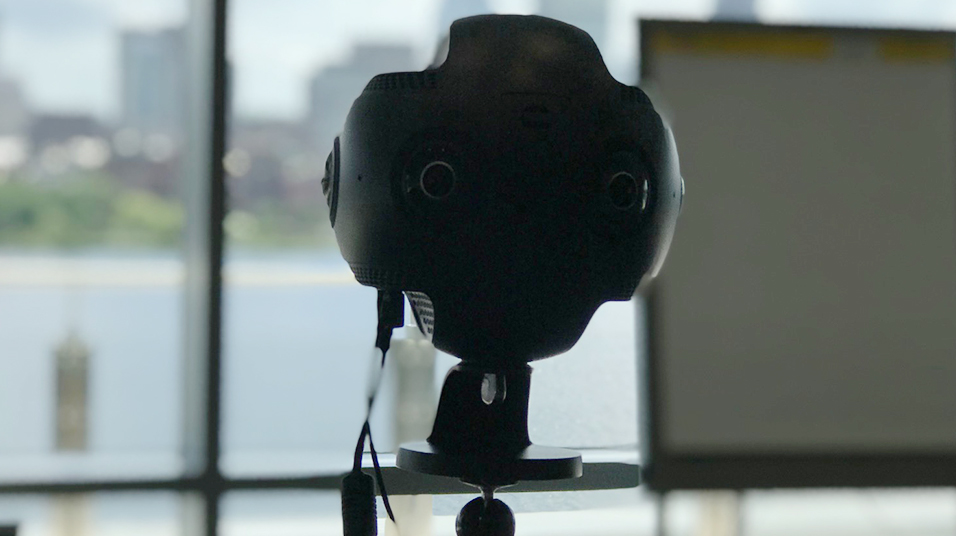
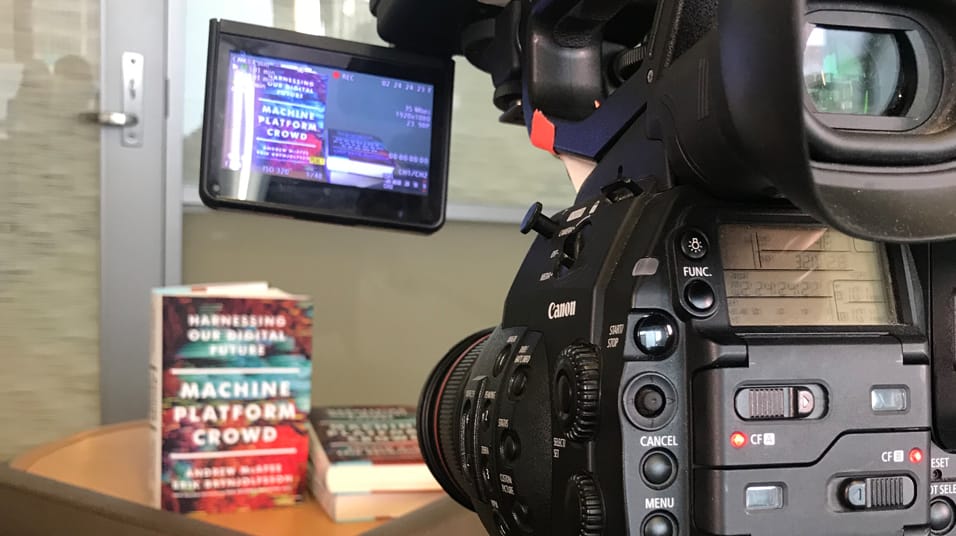
McElroy Films uses all professional quality equipment at every level of production. Cameras, such as the stunningly sharp Canon 7D, record HD video to cards rather than tape to streamline the editing process and get the content onto DVD’s, Blu-rays, and the internet faster and with greater precision. Sound is taken care of by wired and wireless ‘on-subject’ microphones; the same devices used for television and cinema. Once reserved only for high budget productions, McElroy also uses equipment such as dollies, GlideCams, sliders, and professional grade lighting to get that cinematic ‘look’ for any production. With the use of green screen technology, clients can even be interviewed at the new Burlington location and be digitally placed against any background right in the studio.
“Video is no longer limited to distribution by television or DVD,” explains McElroy. “The Internet has evolved into a communal environment where a company’s message can be spread to millions over social networks such as Facebook and Twitter, but that message has to be easily found on search engines such as Yahoo, Bing, and Google to be truly effective. In addition, companies have to find a way to keep users on their site long enough to hear out what they have to say. What better way do grab someone’s attention and get your message across than with embedded videos on home pages and blogs?”
To learn more about McElroy Films LLC, visit their website at http://mcelroyfilms.com, call (888) 303-2744 x703, or visit their new office at 101 Cambridge Street, Suite 300, Burlington, MA 01803.
About Ben McElroy
Ben started his career in high school as a documentarian, filming abroad in Turkey, Israel, Greece, and India for Open Air Campaigners, His Land Israel Tours, and The People’s Baptist College and Seminary. His college experience included the New York Film Academy, Full Sail University in Orlando, FL, and UMass Lowell. Ben won the National Press Photographers Award for outstanding photography during his time with the Lowell Sun and also spent time with the Associated Press, Manchester Union Leader, and Time Warner. His recent corporate videography includes pieces for Fenn School in Concord, MA, the Crohns and Colitis Foundation of America, etc.
About McElroy Films
McElroy Films LLC is a professional producer of high definition video for corporate, educational, non-profit, wedding, music video, and independent film use. Serving the Massachusetts and New England area, McElroy Films’ mission is to keep high definition video affordable without sacrificing quality. Ben McElroy and his staff take pride in their client-first approach and personalized attention to every project.